Corporate Health and Wellness Programs That Support Productivity sets the stage for this enthralling narrative, offering readers a glimpse into a story that is rich in detail and brimming with originality. In today's fast-paced corporate world, focusing on employee well-being is not just a trend but a necessity for driving productivity and success.
Let's delve into the world of corporate health and wellness programs and explore how they play a crucial role in supporting employee productivity.
As we navigate through the intricacies of these programs, we'll uncover the strategies, benefits, and impact they have on creating a thriving work environment.
Importance of Corporate Health and Wellness Programs
Corporate health and wellness programs play a crucial role in enhancing employee productivity and overall well-being in the workplace. These programs are designed to promote healthy habits, reduce stress, and improve physical and mental health, leading to a more engaged and motivated workforce.
Impact on Employee Productivity
Health and wellness programs have a direct impact on employee productivity by reducing absenteeism, boosting morale, and increasing energy levels. When employees are healthy and feel supported in their well-being, they are more likely to perform better and stay focused on their tasks.
Successful Corporate Wellness Initiatives
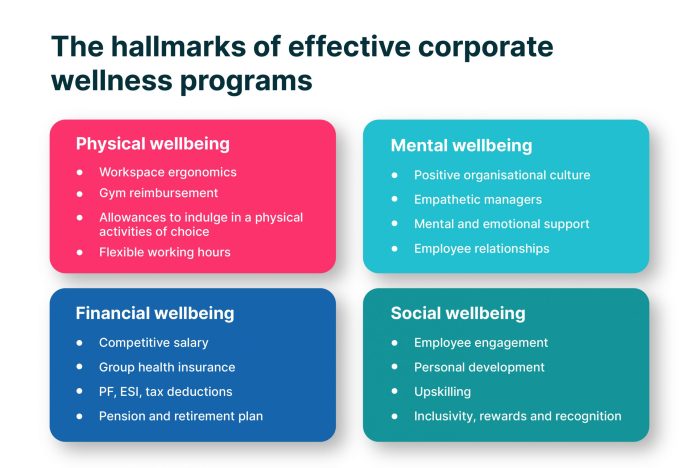
- On-site fitness classes or gym memberships
- Nutritional counseling and healthy eating initiatives
- Mental health resources and stress management programs
- Flexible work arrangements to promote work-life balance
Contribution to a Positive Work Environment
By investing in health and wellness programs, companies create a positive work environment where employees feel valued, supported, and motivated to succeed. A healthy workforce leads to lower turnover rates, increased job satisfaction, and a stronger sense of community within the organization.
Designing Effective Health and Wellness Programs
Creating a successful corporate health and wellness program requires careful planning and consideration of various factors. Let's explore key components to include in a corporate wellness program, strategies for tailoring programs to meet the needs of diverse employees, and the role of leadership support in the success of these initiatives.
Key Components of a Corporate Wellness Program
- Regular Health Assessments: Conducting health assessments can help identify areas of improvement and track progress over time.
- Physical Activity Initiatives: Encouraging employees to stay active through fitness challenges, exercise classes, or walking meetings can improve overall health.
- Nutrition Education: Providing access to healthy food options and nutrition workshops can promote better eating habits among employees.
- Mental Health Support: Offering resources for stress management, mindfulness sessions, and counseling services can address mental health needs.
- Work-Life Balance Programs: Implementing flexible work arrangements, time off policies, and family-friendly initiatives can support employee well-being.
Strategies for Tailoring Programs to Meet Diverse Employee Needs
- Survey Employees: Gather feedback through surveys to understand the specific health and wellness needs of different employee groups.
- Provide Options: Offer a variety of wellness activities and programs to cater to diverse interests and preferences.
- Cultural Sensitivity: Consider cultural backgrounds and traditions when designing wellness initiatives to ensure inclusivity.
- Accessibility: Ensure that wellness programs are accessible to all employees, including those with disabilities or special requirements.
Role of Leadership Support in Wellness Program Success
- Lead by Example: When leaders actively participate in wellness activities and prioritize their health, employees are more likely to follow suit.
- Allocate Resources: Leadership support is essential in allocating budget and resources to sustain wellness programs in the long run.
- Communicate Effectively: Leaders should communicate the importance of health and wellness initiatives to employees and encourage participation.
- Recognize Achievements: Acknowledging and celebrating employee wellness achievements can boost morale and motivation throughout the organization.
Benefits of Employee Engagement in Wellness Programs
Employee engagement plays a crucial role in the success of corporate health and wellness programs
Enhanced Program Effectiveness
Employee engagement in wellness programs leads to higher participation rates, increased motivation, and better adherence to healthy behaviors. This results in improved health outcomes, reduced absenteeism, and higher productivity levels among employees. When employees are engaged in the program, they are more likely to adopt healthier habits and make positive lifestyle changes, leading to better overall well-being.
Ways to Encourage Active Participation
- Provide incentives: Offering rewards, recognition, or prizes for participation can motivate employees to engage in wellness activities. - Create a supportive environment: Encouraging a culture of health and well-being within the organization can make employees feel more comfortable and motivated to participate. - Offer a variety of activities: Providing a range of wellness programs and activities catered to different interests and fitness levels can encourage broader participation.
Long-Term Benefits of Sustained Employee Engagement
Sustained employee engagement in wellness programs can lead to a healthier and more engaged workforce in the long run. As employees continue to prioritize their health and well-being, they are less likely to experience chronic health conditions, leading to lower healthcare costs for the organization.
Additionally, employees who are actively engaged in wellness programs tend to be more satisfied with their jobs, leading to higher retention rates and improved overall morale within the organization.
Measuring the Impact of Corporate Health Initiatives
Corporate health initiatives are an essential component of employee well-being and productivity. Evaluating the success of health and wellness programs is crucial to ensure that they are effective and beneficial for both employees and the organization.
Methods for Evaluating Success
- Employee Participation Rates: Monitoring the number of employees engaging in health programs can indicate the level of interest and involvement.
- Health Assessments: Conducting regular health assessments can help track changes in employee health over time.
- Surveys and Feedback: Gathering feedback from employees about their experiences with the programs can provide valuable insights.
Key Performance Indicators for Tracking Impact
- Absenteeism Rates: Monitoring absenteeism can help determine if the programs have a positive impact on reducing sick days.
- Healthcare Costs: Tracking healthcare expenses before and after implementing wellness programs can show cost savings.
- Productivity Metrics: Assessing productivity levels before and after the programs can reveal improvements in employee performance.
Metrics for Measuring ROI
- Return on Investment (ROI): Calculating the ROI of health initiatives by comparing the costs of the programs to the benefits, such as reduced healthcare costs or increased productivity.
- Employee Retention Rates: Monitoring employee turnover rates before and after implementing wellness programs can indicate the impact on employee satisfaction and retention.
Ultimate Conclusion
In conclusion, Corporate Health and Wellness Programs That Support Productivity are not only about physical health but also about fostering a culture that values and prioritizes the well-being of employees. By investing in these programs, companies can witness a significant improvement in productivity, employee engagement, and overall organizational success.
It's time to embrace a holistic approach to employee wellness to unlock their full potential and achieve sustainable growth in the corporate landscape.
User Queries
How do health and wellness programs impact employee productivity?
Health and wellness programs can boost employee productivity by reducing absenteeism, enhancing morale, and improving overall health, leading to increased focus and efficiency at work.
What role does leadership support play in the success of wellness initiatives?
Leadership support is crucial as it sets the tone for the organization, showing a commitment to employee well-being. When leaders actively participate and promote wellness programs, employees are more likely to engage and benefit from them.
How can companies measure the success of their health and wellness programs?
Companies can measure success by tracking metrics such as participation rates, health outcomes, employee feedback, and productivity levels. These data points provide valuable insights into the effectiveness of the programs.