Delving into the Mental Benefits of Dancing Backed by Research, this introduction immerses readers in a unique and compelling narrative. It provides an overview of how dancing can positively impact cognitive function, reduce stress and anxiety levels, and enhance overall well-being.
Mental Benefits of Dancing Backed by Research
Dancing has been shown to have numerous mental benefits, as supported by research studies. These benefits extend beyond just physical exercise and can positively impact cognitive function, stress levels, and overall mental well-being.
Studies Showing Mental Benefits of Dancing
Research studies have demonstrated the positive effects of dancing on mental health. For example, a study published in the Journal of Applied Gerontology found that regular dance sessions can improve cognitive function in older adults. Another study in the Journal of Psychiatric and Mental Health Nursing showed that dancing can help reduce symptoms of depression and anxiety.
Dancing and Cognitive Function
Dancing involves learning and memorizing steps, which can stimulate the brain and improve cognitive function. The coordination required in dancing can also enhance neural connections, leading to better overall brain health. Research has shown that dance interventions can be effective in improving memory, attention, and executive function in individuals of all ages.
Impact of Dancing on Stress and Anxiety Levels
Engaging in dance can act as a form of stress relief and help reduce anxiety levels. The physical activity involved in dancing releases endorphins, which are known as the "feel-good" hormones. Additionally, the social aspect of dancing can provide social support and a sense of community, further contributing to stress reduction.
Studies have shown that regular dance practice can lead to decreased levels of cortisol, the stress hormone, in the body.
Psychological Effects of Dancing
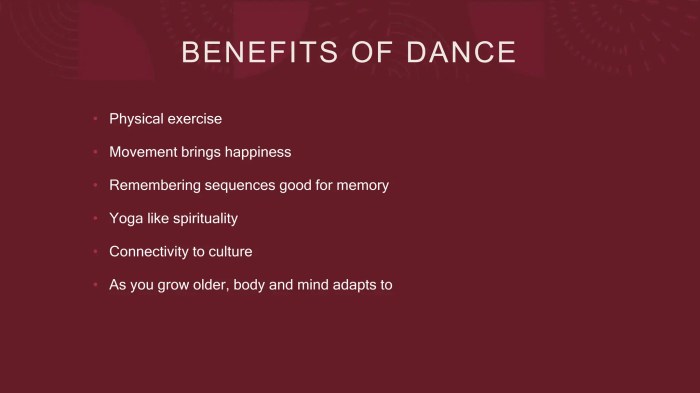
Dancing is not only a physical activity but also a powerful tool for boosting self-esteem and confidence. Through movement and expression, individuals can build a positive self-image and feel a sense of accomplishment.
Dancing and Mental Well-being
Research has shown a strong relationship between dancing and mental well-being. A study published in The Arts in Psychotherapy journal found that dancing can reduce feelings of anxiety and depression. The rhythmic movements and music can help individuals relax, improve their mood, and increase their overall mental health.
- Dancing has been associated with lower levels of cortisol, the stress hormone, leading to reduced stress and improved emotional well-being.
- Engaging in dance classes or social dancing can provide a sense of community and belonging, which is essential for mental wellness.
- Regular dance practice has been linked to better cognitive function and increased feelings of happiness and fulfillment.
Neurological Benefits of Dancing
Dancing is not only beneficial for physical health but also plays a significant role in promoting brain health. Research has shown that engaging in dance activities can have positive effects on neurological functions.
Neuroplasticity and Cognitive Flexibility
Dancing involves learning and remembering complex movements, which can help improve neuroplasticitythe brain's ability to reorganize itself by forming new neural connections. This, in turn, enhances cognitive flexibility, allowing individuals to adapt to new situations and think creatively.
- Dancing requires coordination, balance, and rhythm, stimulating various regions of the brain involved in motor skills, memory, and emotion.
- Regular dancing has been linked to increased gray matter volume in the hippocampus, a region critical for memory and learning.
- Studies have shown that dancers exhibit better attention, memory, and executive function compared to non-dancers.
Delaying Neurodegenerative Diseases
The cognitive demands of dancing can help protect the brain from age-related decline and delay the onset of neurodegenerative diseases such as Alzheimer's and Parkinson's.
- Research suggests that dancing can reduce the risk of developing dementia by up to 76%.
- The social and physical engagement in dance activities can improve mood, reduce stress, and enhance overall brain health.
- Dancing has been found to be a powerful tool in maintaining cognitive function and independence in older adults.
Emotional Regulation through Dancing
Dancing is not only a physical activity but also a powerful tool for emotional expression and regulation. The act of dancing allows individuals to tap into their emotions, release pent-up feelings, and find a sense of catharsis.
Emotional Expression and Regulation
- Dancing provides a non-verbal outlet for individuals to express a wide range of emotions, from joy and excitement to sadness and anger.
- Through movement, dancers can release emotional tension and process difficult feelings in a healthy way.
- Engaging in dance can help individuals regulate their emotions by promoting mindfulness and self-awareness.
Emotional Release and Catharsis
- When dancing, individuals often experience a sense of release as they let go of inhibitions and allow their bodies to move freely.
- This release can lead to a cathartic experience, where dancers feel lighter and more at peace after expressing their emotions through movement.
- Dancing can serve as a form of therapy, helping individuals work through emotional challenges and find healing.
Improving Emotional Intelligence and Empathy
- Regularly engaging in dance can enhance emotional intelligence by increasing one's ability to recognize and understand emotions, both in oneself and others.
- By connecting with different styles of dance and music, individuals can develop empathy and a deeper appreciation for diverse emotional experiences.
- Through group dance activities, individuals practice social skills and learn to communicate non-verbally, fostering empathy and emotional connection with others.
Final Thoughts
In conclusion, the discussion on the Mental Benefits of Dancing Backed by Research highlights the profound effects of dancing on mental health. From improving cognitive function to boosting emotional regulation, dancing offers a holistic approach to enhancing well-being.
Q&A
How can dancing improve cognitive function?
Dancing has been shown to stimulate various brain functions, including memory, attention, and executive function, ultimately enhancing cognitive abilities.
What is the impact of dancing on reducing stress and anxiety levels?
Dancing helps release endorphins, the feel-good hormones, which can reduce stress and anxiety levels by promoting relaxation and improving mood.
Can dancing enhance mood and contribute to overall happiness?
Yes, engaging in dancing activities has been linked to increased levels of serotonin and dopamine, neurotransmitters associated with happiness and well-being.
How does dancing delay the onset of neurodegenerative diseases?
Regular dancing can improve neural connectivity and promote neuroplasticity, which are crucial in maintaining brain health and delaying the onset of neurodegenerative conditions.
What role does dancing play in emotional expression and regulation?
Dancing serves as a form of emotional release and catharsis. It allows individuals to express themselves physically, leading to improved emotional intelligence and empathy.